
For learners
Parking and waiting rules
Where you can park in the UK is written on the road itself - yellow and red lines, zone signs and kerb marks. Read them right and you'll never collect a ticket; read them wrong and it's £70-£160 a time. Here's the whole system in plain English, with the signs each rule comes from.
01
Yellow lines: no waiting
- A single yellow line means no waiting during the times shown on a nearby time-plate - outside those hours you can park unless another restriction applies.
- A double yellow line means no waiting at any time. No time-plate is needed; the double line IS the 24-hour rule.
- 'Waiting' means parking or sitting parked. You may usually stop briefly to let a passenger in or out, and to load or unload - unless kerb blips ban loading (see below).
- Short yellow marks painted on the kerb edge ('kerb blips') ban loading: one blip = loading restricted during the signed times, two blips = no loading at any time.
- Blue Badge holders can usually park on single or double yellow lines for up to 3 hours (with the clock displayed) unless there's a loading ban - but never where it would cause an obstruction.
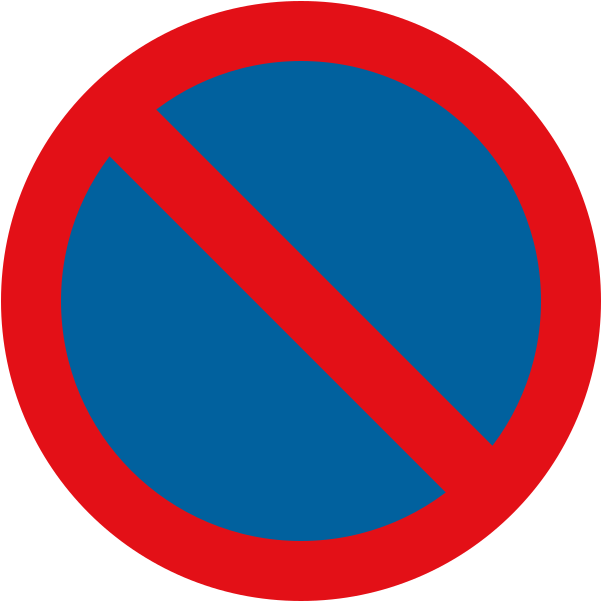 No waiting sign & yellow linesThe sign behind the yellow-line rulesWaiting and parking rules 238-252 (gov.uk)The Highway Code source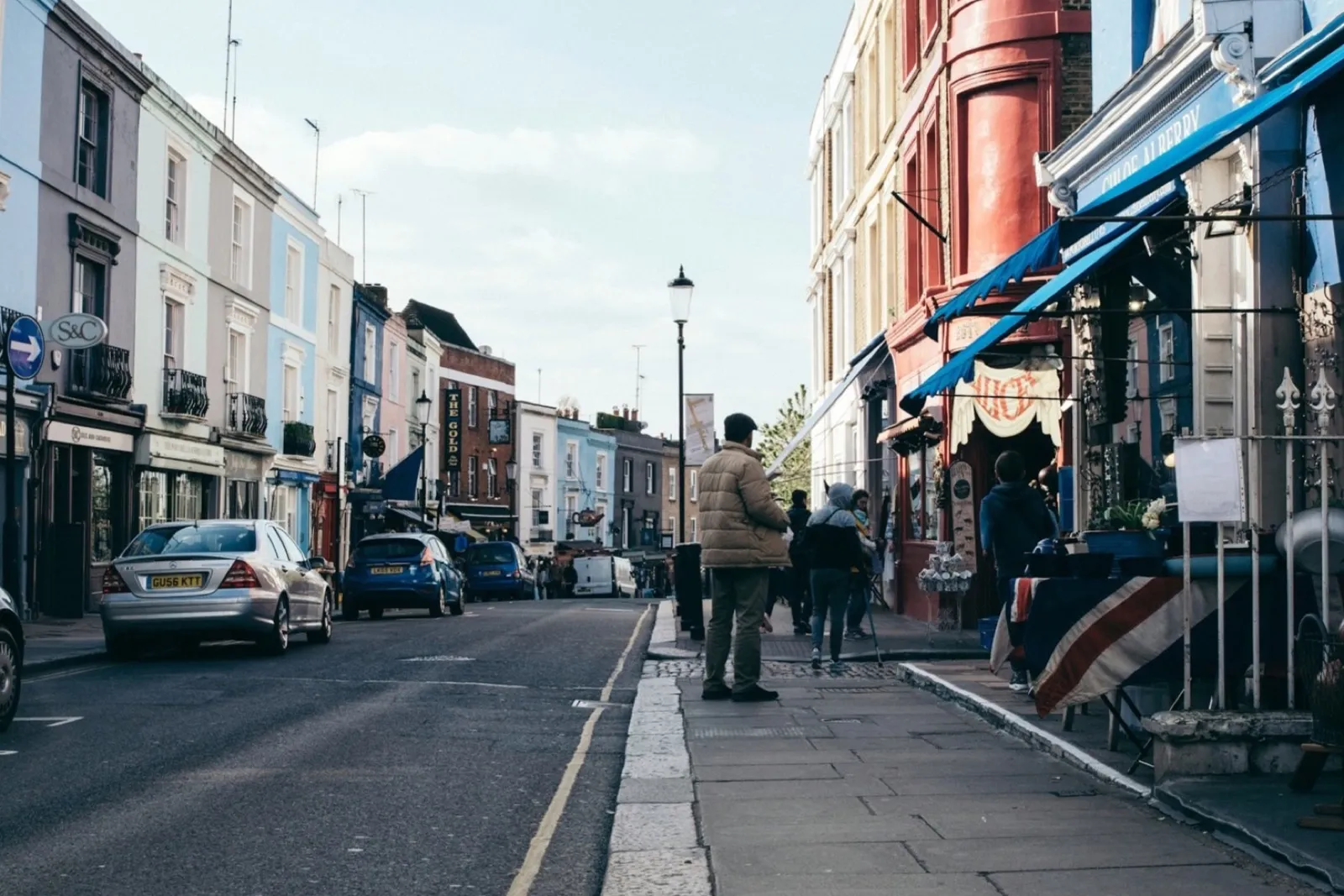
02
Red routes and clearways: no stopping at all
- Red lines are stricter than yellow: a double red line means no stopping at any time, a single red line means no stopping during the times on the signs.
- On a red route you can't even pause to set someone down - only marked bays (and bus-stop boxes, for buses) allow any stopping. TfL's red routes carry about a third of London's traffic on 5% of its roads, so enforcement is heavy and camera-led.
- A rural clearway (the blue disc with a red cross) is the out-of-town version: no stopping on the main carriageway for any reason, often 24 hours.
- Bus stop clearways (the yellow box marking at bus stops) mean only buses may stop there - even without red lines.
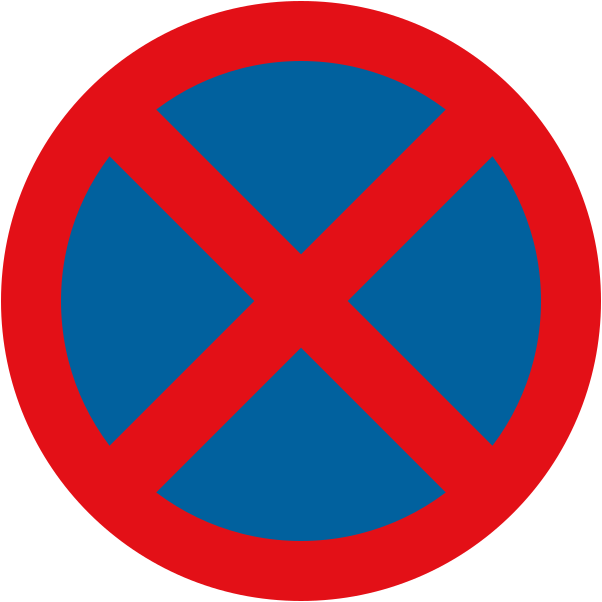 No stopping / Clearway signThe red-cross disc explainedNo stopping except for busesRed-route bus stops
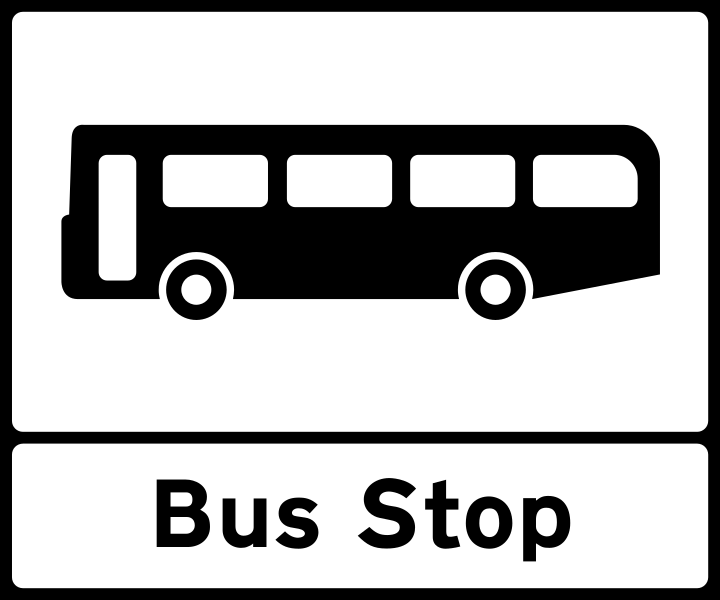 Bus stop sign & markingsWhy you keep the stop clearRules of red routes (TfL)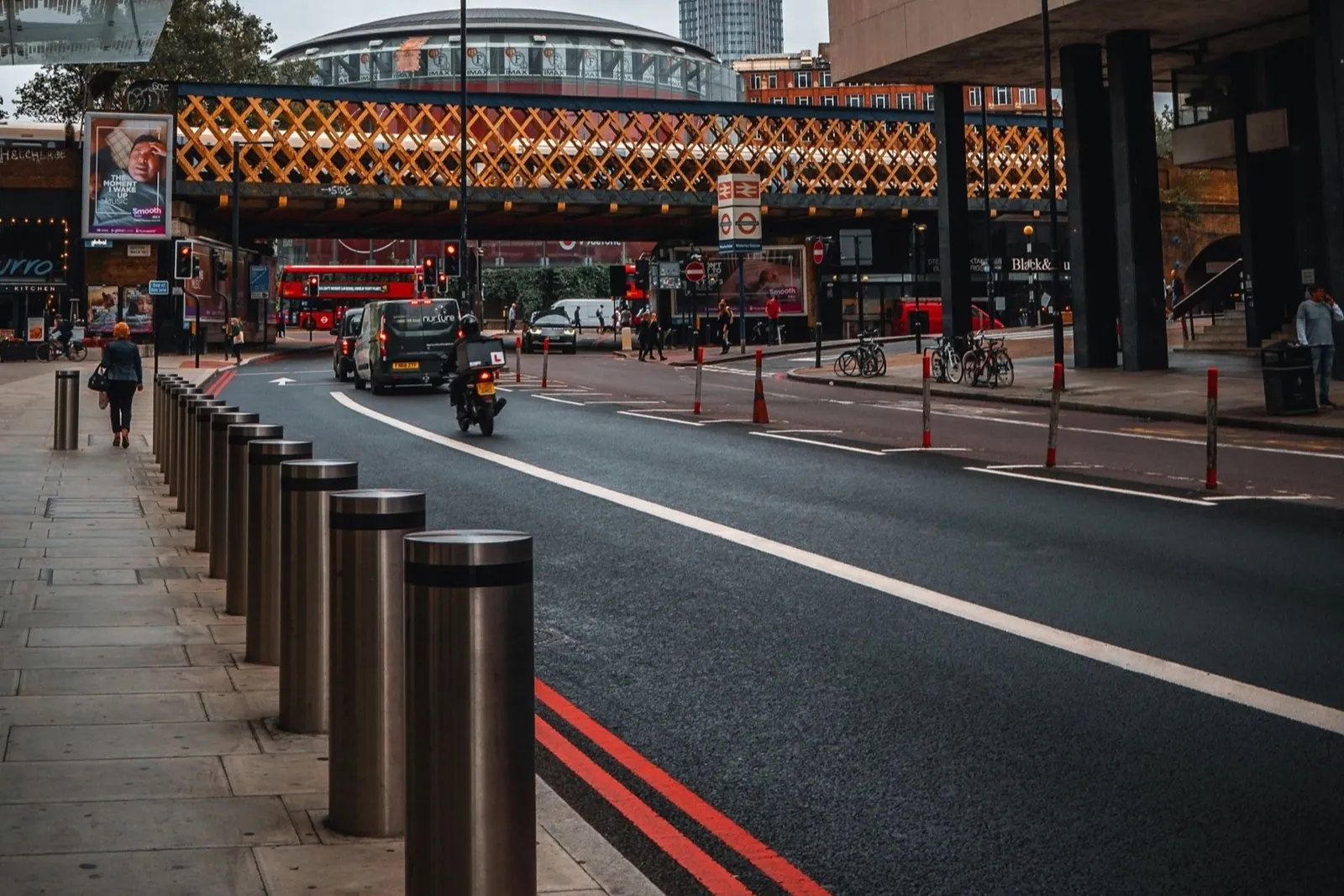
03
Controlled parking zones (CPZs)
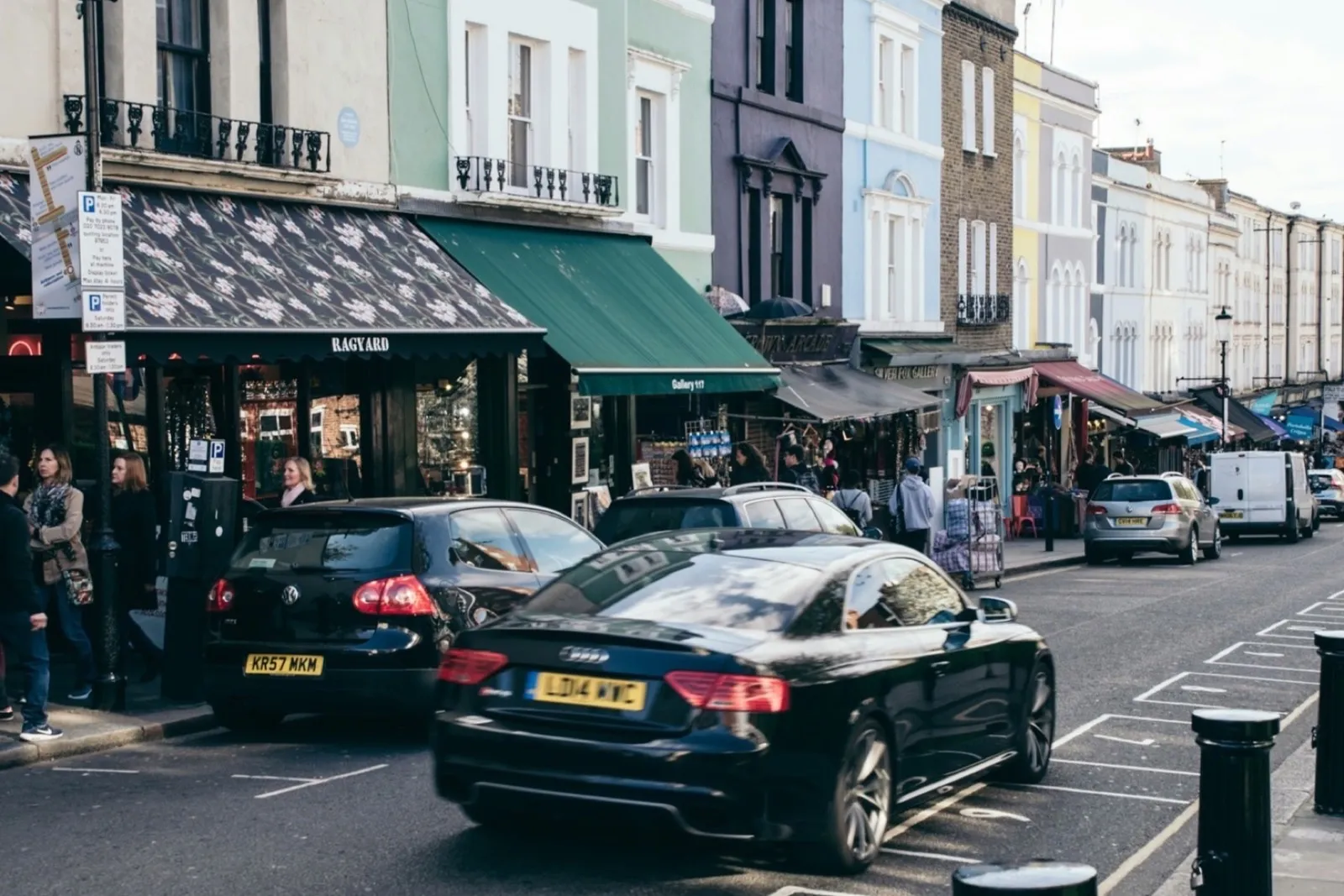
- A CPZ entry sign sets the waiting hours for every single yellow line inside the zone - individual lines don't carry their own time-plates.
- During the zone's hours you can only park in marked bays: resident-permit, pay-and-display, or shared-use. Read the bay plate - a permit bay without a permit is a ticket even with space everywhere.
- Outside the zone's hours the single-yellow restriction lifts, but double yellows and bay rules still apply.
- The 'zone ends' sign means only that the blanket hours stop - check the kerb where you actually park, because another zone or ordinary yellow lines may start immediately.
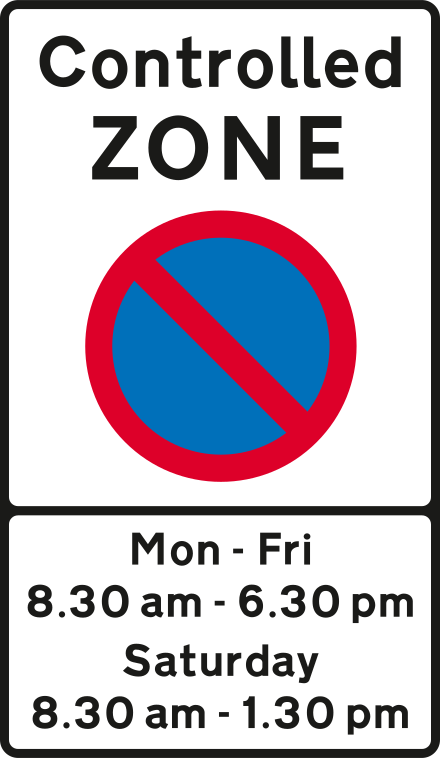
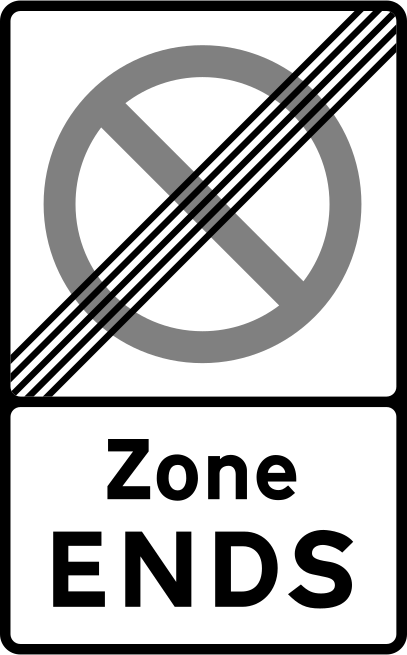
04
Places you can never park
Some places are off-limits even with no lines at all - the Highway Code (rules 238-252) bans or warns against parking in all of these:
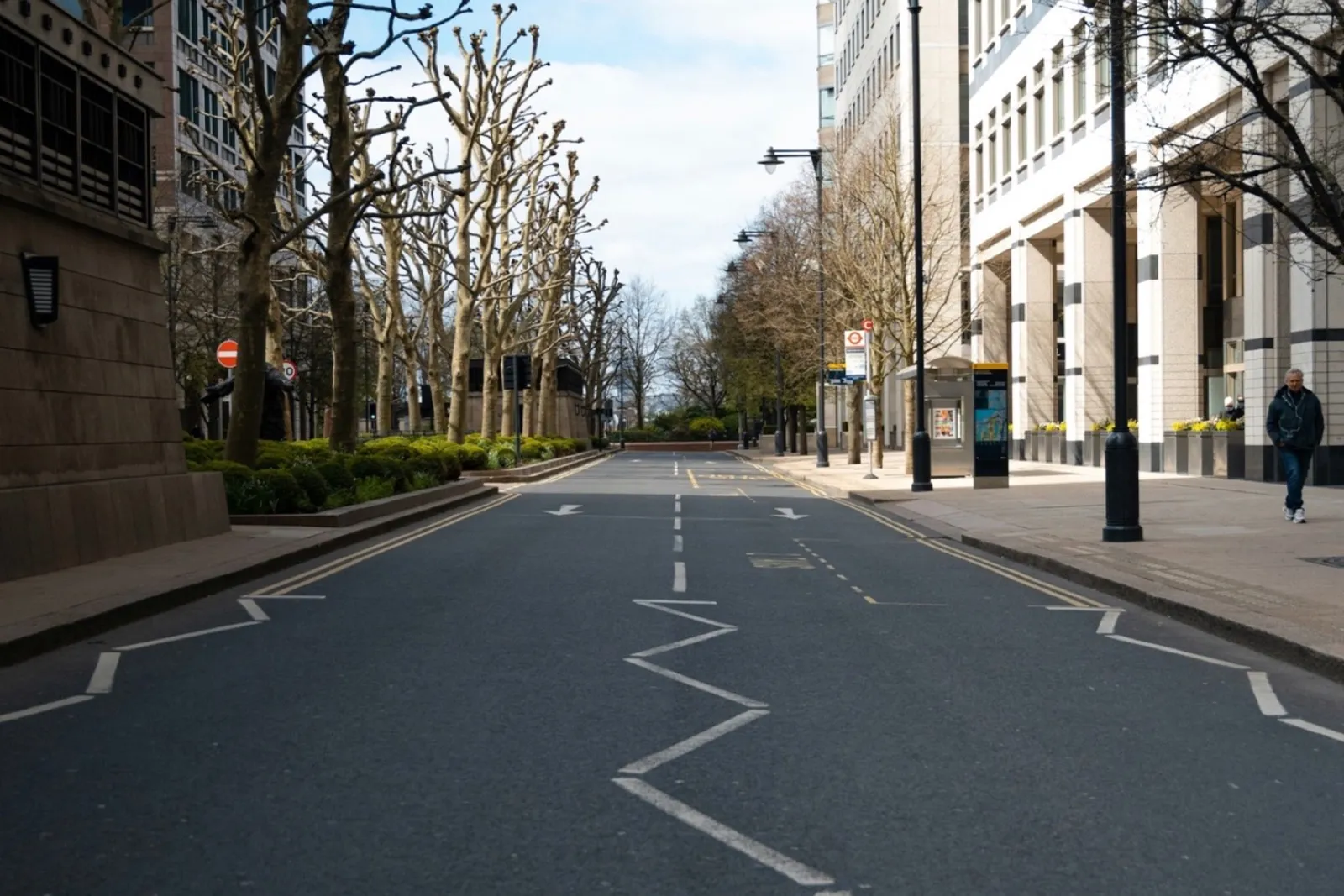
- On zigzag lines by pedestrian crossings (an endorsable offence - this one can carry points, not just a PCN).
- Opposite or within 10 metres (32 feet) of a junction, except in an authorised space.
- On dropped kerbs for wheelchairs and prams, or across someone's driveway.
- In front of a school entrance on the yellow zigzag 'keep clear' markings.
- On the pavement in London (banned borough-wide) - and increasingly restricted elsewhere.
- Anywhere you'd double-park or block emergency access, bus stops, or cycle lanes during their hours.
05
What a parking ticket costs - and what to do with one
| Where | Higher level | Lower level | Paid within 14 days |
|---|---|---|---|
| London (band A boroughs) | £160 | £110 | £80 / £55 |
| London (band B boroughs) | £140 | £90 | £70 / £45 |
| Outside London (statutory) | £70 | £50 | £35 / £25 |
Civil Penalty Charge Notices (PCNs) - no licence points. London figures follow the 2025 London Councils bands; which level a contravention falls in is set by the council, so treat these as a guide and check your notice.
- A PCN is civil: money only, no points, handled by the council or TfL - different from a police fixed penalty.
- Pay within 14 days (21 for camera-issued) and most PCNs are halved. Paying usually ends your right to challenge.
- If the ticket is wrong - unclear signs, you were loading, the machine was broken - challenge it instead: make an informal challenge first, then a formal representation, then the independent adjudicator. Photograph the signs and lines at the time.
06
The signs behind the rules
Waiting, stopping and parking
Traffic-sign artwork is Crown copyright, reproduced under the Open Government Licence v3.0; meanings from the Highway Code (gov.uk).
07
Quick answers
- Can I stop on a double yellow line to drop someone off?
- Usually yes, briefly - waiting means parking, not a quick set-down. But not where there's a stopping ban (red route, clearway, zigzags), and never blocking a junction or crossing.
- Do parking tickets put points on my licence?
- No - a PCN is a civil charge, money only. The exception territory is criminal offences like stopping on crossing zigzags, which can be endorsable.
- Is it worth challenging a PCN?
- If the signs were missing or unclear, you were loading, or the facts are wrong - yes, and a large share of challenges succeed. Photograph everything at the scene, and remember the discount window usually pauses while a challenge is considered (check your notice).
- Can I park on a single yellow line in the evening?
- If the time-plate (or the CPZ entry sign) shows the restriction has ended for the day, yes - unless bay markings, double yellows, or a loading ban say otherwise.
Last updated:
Start with a first lesson.