
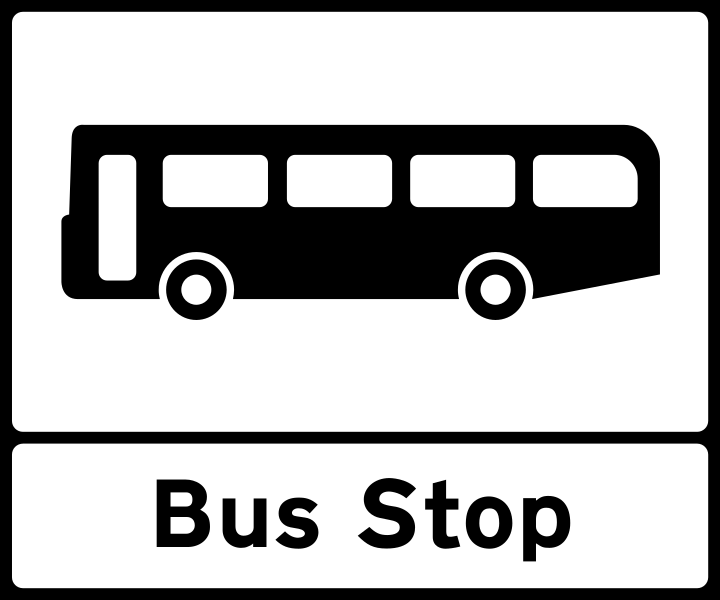
An information sign
Bus stop
A blue bus-stop sign marks a designated stopping place for buses. Many are backed by a yellow bus-stop clearway marking on the road, where you must not stop.
01
What it means
The sign itself just identifies the stop. What matters for a driver is the yellow bus-stop clearway marking that often goes with it: you must not stop or wait in it during its hours, so buses can reach the kerb and pull away. Even without a clearway, never park on or so close to a bus stop that you'd block a bus.
Under the hierarchy of road users, give way to a bus signalling to pull out from a stop when you can do so safely (Highway Code Rule 223).
02
Where you'll see it
Along bus routes on almost every town and city road.
03
On your driving test
Don't stop or wait at a bus stop if asked to pull up, and give way to buses pulling away where it's safe. Examiners mark both the observation and the courtesy.
Fines and penalties
Stopping in a bus-stop clearway is a parking contravention (a PCN) - up to about £160 in London, or £70/£50 outside, typically halved if paid early. No licence points.
Often confused with
Quick answers
Can I stop at a bus stop to drop someone off?
Not where there's a bus-stop clearway (the yellow marking) during its hours - that bans stopping. Elsewhere, only if you won't obstruct a bus; it's better to find a spot clear of the stop.
Sign artwork is Crown copyright, reproduced under the Open Government Licence v3.0; meanings from the Highway Code (gov.uk).
Last updated:
Start with a first lesson.