
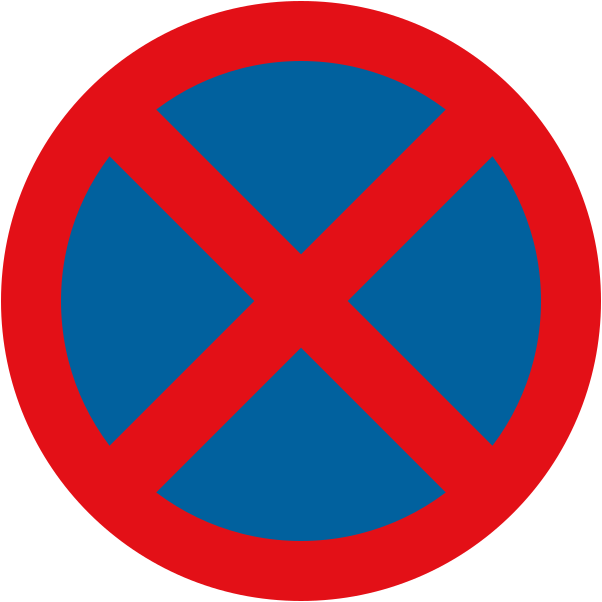
A sign that gives orders
No stopping (Clearway)
A blue disc with a red ring and a red cross means no stopping - a clearway. You must not stop at all on the main carriageway, not even to set down or pick up.
01
What it means
This is stricter than 'no waiting'. On a clearway you can't stop for any reason on the main carriageway during the hours shown (many rural clearways are 24 hours). The idea is to keep fast or busy roads flowing. In towns the red-route version uses red lines instead of yellow: double red means no stopping at any time, single red no stopping during the times on the signs.
The only exceptions are things like a breakdown or being stopped by traffic - not choosing to pull up.
02
Where you'll see it
Fast A-roads and rural through-roads (the blue-and-red disc), and TfL red routes across London (red lines along the kerb).
03
On your driving test
Examiners won't ask you to stop on a clearway or red route. Knowing you can't is the point - if asked to pull up 'when it's safe and legal', a clearway is neither.
Fines and penalties
Stopping on a red route is one of the more expensive contraventions: in London it's typically £160, halved if paid early. On a rural clearway it's enforced as a stopping/waiting offence. As with all parking penalties it's civil - no licence points - but don't rely on that; the point of a clearway is safety on a fast road.
Often confused with
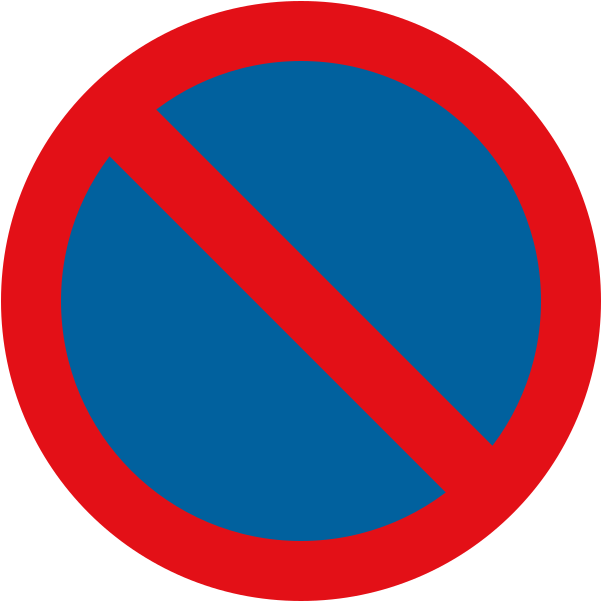
Quick answers
What's the difference between a clearway and no waiting?
No waiting bans parking but usually lets you stop briefly to load or set down. A clearway bans stopping altogether on the main carriageway - you can't even pause.
What are red lines?
Red routes. A double red line means no stopping at any time; a single red line means no stopping during the times on nearby signs. They're the town version of a clearway, used across London.
Sign artwork is Crown copyright, reproduced under the Open Government Licence v3.0; meanings from the Highway Code (gov.uk).
Last updated:
Start with a first lesson.