
An information sign
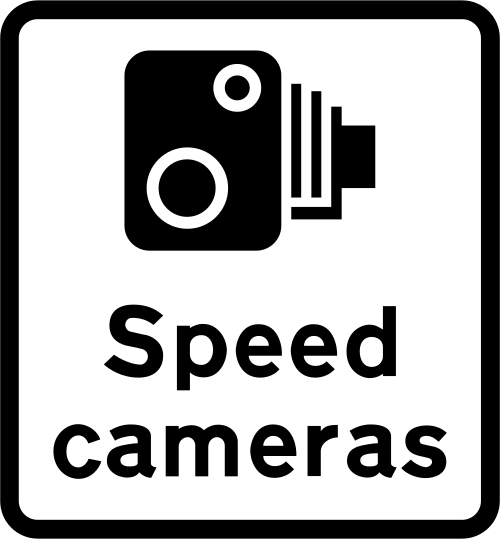
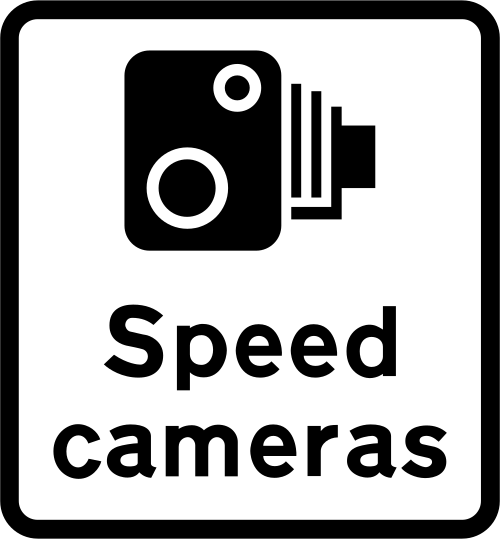
Variable speed limit with camera enforcement
On a smart motorway, a speed limit shown in a red ring on the overhead gantry is a mandatory variable limit - it's the legal maximum right then, and it's camera-enforced.
01
What it means
Variable limits change with the traffic to keep it flowing and safe - you'll see 60, 50 or 40 appear on the gantries when there's congestion, a hazard or an incident ahead. Shown inside a red ring, the limit is compulsory, not advice, and the gantry cameras enforce it. A red X over a lane means that lane is closed - don't drive in it.
There isn't a single official sign diagram for the whole gantry scene, so this page describes it rather than showing a face; on the motorway you read the actual gantry.
02
Where you'll see it
Smart motorways such as stretches of the M25, M1, M6 and M42, where overhead gantries set the limit lane by lane.
03
On your driving test
Motorways aren't part of the L-test, but new drivers can take motorway lessons with an instructor. The rule is simple: obey the gantry limit as a legal maximum, and never enter a lane showing a red X.
Fines and penalties
Breaking a variable limit is speeding like any other - normally a £100 fine and 3 points minimum, more in serious cases. Ignoring a red X can bring a fine and points too. New drivers lose their licence at 6 points within two years.
Often confused with
Quick answers
Is a variable speed limit compulsory?
Yes, when it's shown in a red ring on the gantry it's a mandatory legal limit and camera-enforced, exactly like a fixed limit - not a suggestion.
What does a red X over a lane mean?
That lane is closed - you must not drive in it. Move into an open lane in good time. Driving under a red X is an offence and can bring a fine and points.
Rules and meanings from the Highway Code (gov.uk).
Last updated:
Start with a first lesson.