
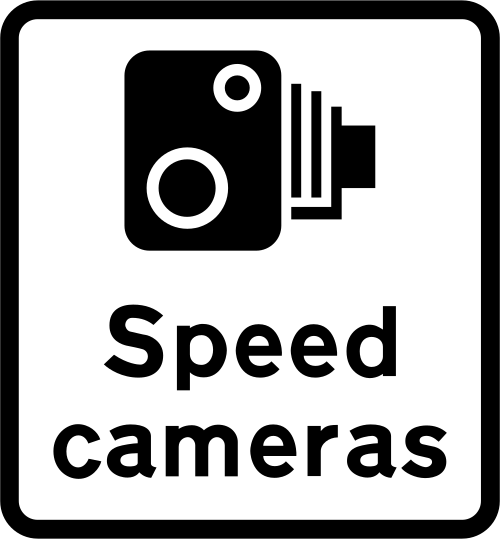
A warning sign
Speed camera
Speed cameras catch you doing more than the limit. There are fixed, average-speed and mobile types, and the penalty starts at a £100 fine and 3 points.
01
What it means
A speed camera measures your speed and, if you're over the limit, records the evidence for a penalty. There are three common kinds: fixed cameras (like a Gatso, often rear-facing), average-speed cameras (two or more cameras that time you over a distance, common through roadworks), and mobile cameras (a police van or a handheld device).
02
Where you'll see it
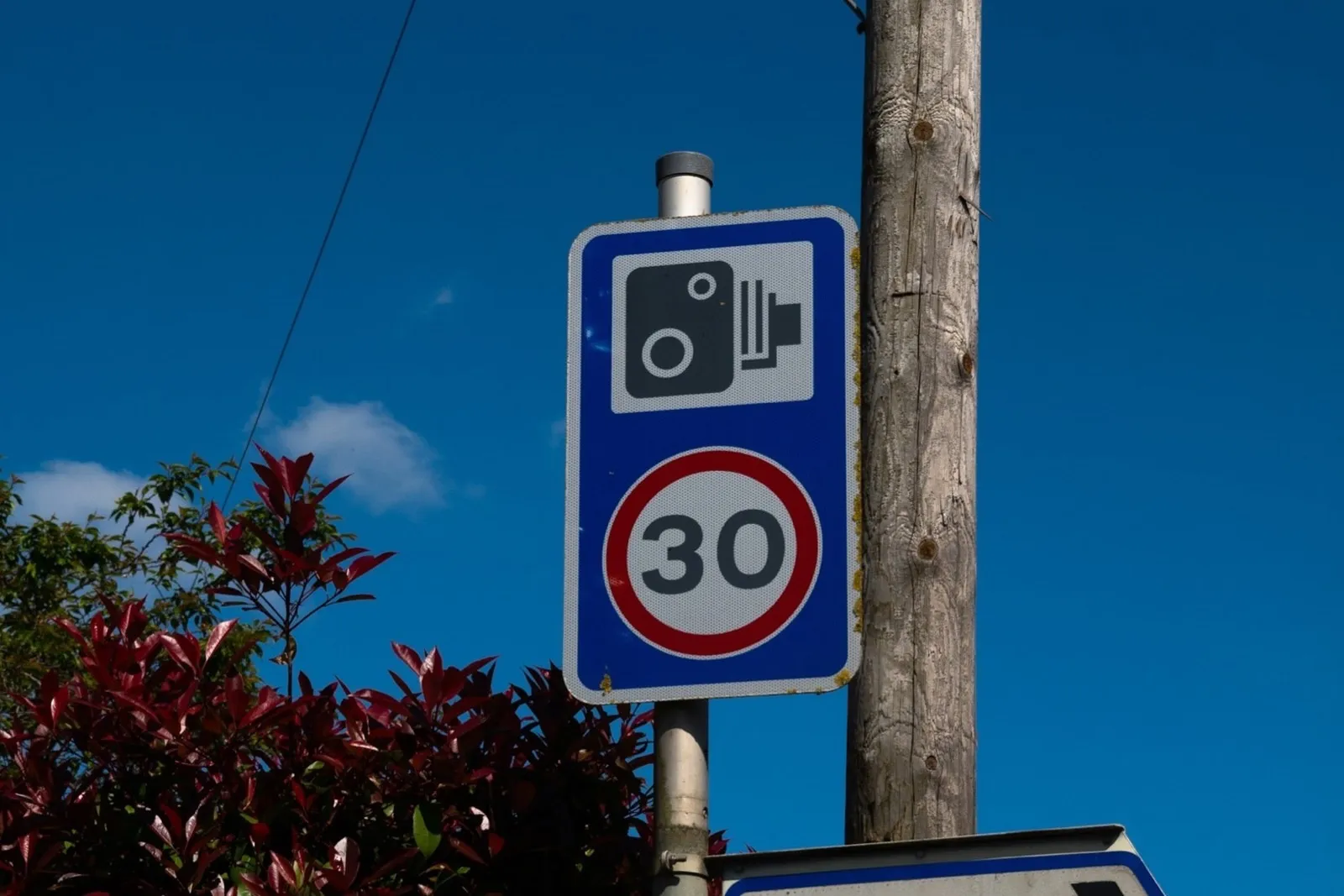
Anywhere the limit is enforced - accident spots, school routes, motorways and roadworks. A camera warning sign often marks them, and fixed cameras are usually painted yellow. But note: there is no absolute legal requirement for a camera to be signed or visible, so don't assume an unsigned camera doesn't count - it does.
03
On your driving test
You won't 'meet' a speed camera as a test exercise, but speed is marked throughout: going over the limit is a serious fault, and so is drifting well under it or hesitating. Match your speed to the limit and the conditions.
Fines and penalties
The minimum penalty for speeding is a £100 fine and 3 penalty points on your licence. For a first, lower-level offence the police may instead offer a speed awareness course, if you haven't done one in the last three years.
Faster or repeat offences go to court, where the fine is a percentage of your weekly income up to £1,000 (£2,500 on a motorway) and you can be disqualified. Reaching 12 points in three years usually means a ban.
New drivers, take note: if you passed your test within the last two years and reach 6 penalty points, your licence is revoked - and two speeding offences (3 points each) is enough. You then go back to a provisional and re-sit both the theory and practical tests.
Quick answers
How much is a speeding fine?
The minimum is £100 and 3 penalty points. You may be offered a speed awareness course instead for a minor first offence. Higher speeds go to court, where fines are income-based (up to £1,000, or £2,500 on a motorway) and you can be banned.
Do speed cameras have to be signed?
There is no absolute legal requirement to sign or paint a speed camera, though guidance and convention is that they usually are. Don't assume an unsigned camera doesn't count - it still does.
What happens if a new driver is caught speeding?
If you passed within the last two years and reach 6 penalty points, your licence is revoked - and two speeding offences is enough. You then reapply for a provisional and re-sit the theory and practical tests.
Sign artwork is Crown copyright, reproduced under the Open Government Licence v3.0; meanings from the Highway Code (gov.uk).
Last updated:
Start with a first lesson.