
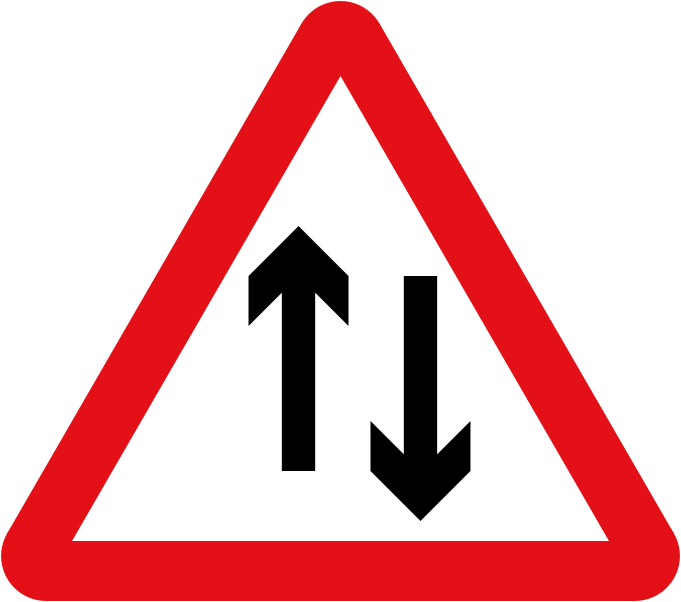
A warning sign
Two-way traffic ahead
A red triangle with two vertical arrows (one up, one down) warns of two-way traffic ahead - you'll meet oncoming vehicles where you may not have expected them.
01
What it means
It's used where a one-way street, a dual carriageway, or a one-way section of a bypass ends and the road becomes two-way. The warning matters because your instinct after a one-way stretch is to use the whole road - now you must keep left and expect traffic coming the other way. A separate 'two-way traffic crosses a one-way road' version has the arrows horizontal.
02
Where you'll see it
The end of a dual carriageway, the exit of a one-way system, and where a bypass rejoins a normal road.
03
On your driving test
Adjust your road position promptly: move to the left, moderate your speed, and don't overtake until you can see it's a genuine two-way road with a clear view ahead.
Often confused with
Quick answers
Why warn about two-way traffic?
Because it usually follows a one-way street or dual carriageway, where drivers stop expecting oncoming vehicles. The sign resets that expectation - keep left and watch for oncoming traffic.
Sign artwork is Crown copyright, reproduced under the Open Government Licence v3.0; meanings from the Highway Code (gov.uk).
Last updated:
Start with a first lesson.