
For learners
One pole, many signs: how to read them
A pole with three or four signs stacked on it looks intimidating, but there's a fixed grammar: the sign at the top gives the order, and every plate below it qualifies that order - when it applies, in which direction, and who's exempt. Read top to bottom and any pole makes sense.
01
The reading order
- Start at the top: the biggest sign (a red circle, blue circle or triangle) is the rule itself - no entry, no waiting, a speed limit.
- Then read each plate below in turn: white plates with times ('Mon-Sat 9am-5pm') say WHEN the rule applies; outside those hours it doesn't.
- Arrows point along the kerb: the restriction runs in the arrow's direction from where you're standing. Two plates with opposite arrows mean different rules on each side of the pole.
- Exemption plates ('Except for access', 'Except buses', 'Except for loading') say who may ignore the rule - and only for that purpose.
- 'At any time' means exactly that - the rule never switches off, like a double yellow line.
02
A real pole, decoded
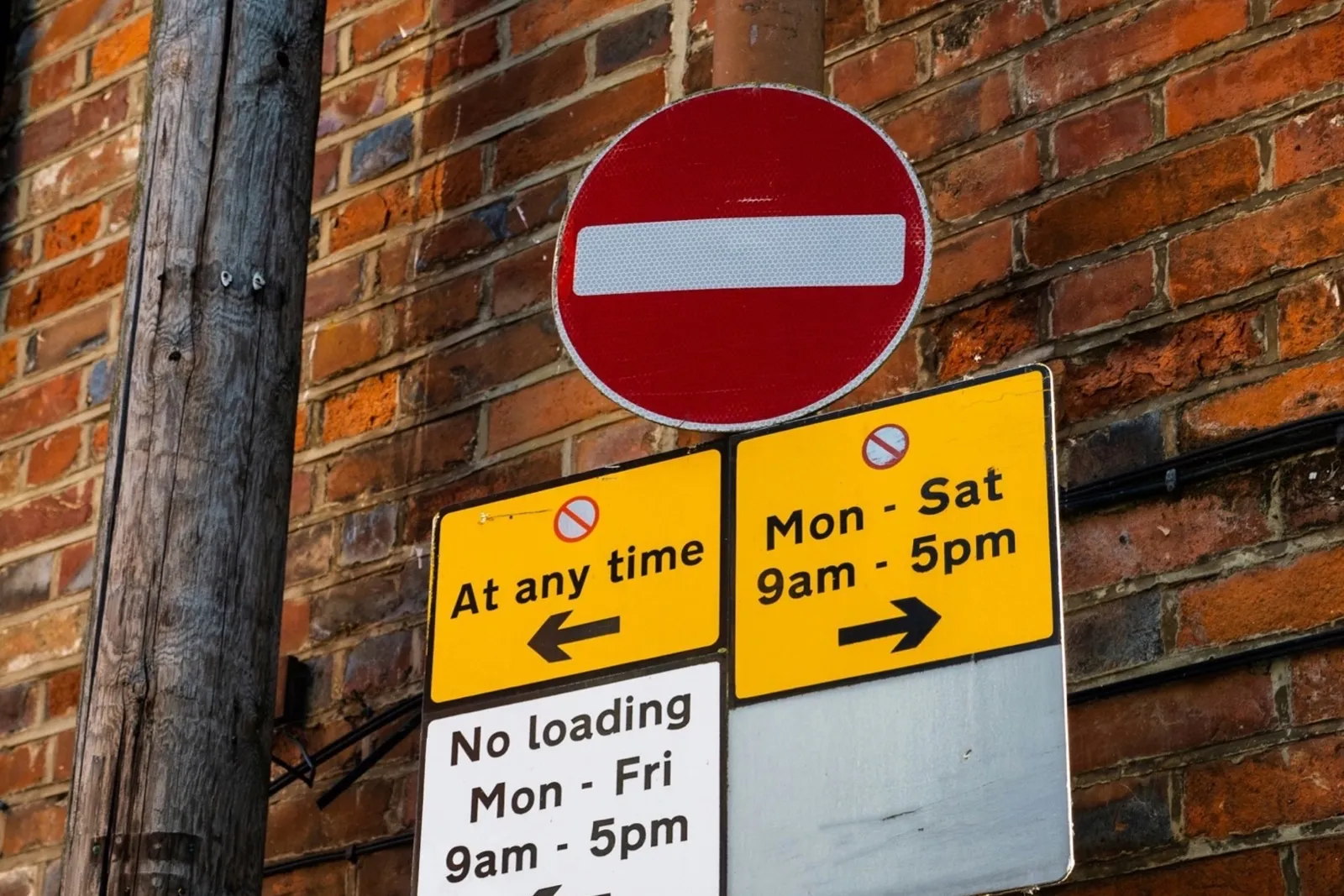
- The no-entry disc at the top is the headline order: vehicles must not enter this street from here.
- The yellow plates beneath carry waiting restrictions: 'At any time' with a left arrow (a permanent restriction running to the left) and 'Mon-Sat 9am-5pm' with a right arrow (a daytime-only restriction running right).
- The white 'No loading Mon-Fri 9am-5pm' plate adds a loading ban - during those hours you can't even stop to unload on that side.
- So the same pole tells a driver: don't enter here; to the left, never wait; to the right, don't wait during shop hours; and don't load on weekday working hours.
03
The plates you'll meet most
| Plate | What it does |
|---|---|
| Times ('Mon-Fri 8am-6.30pm') | Limits the rule to those hours - outside them, it's off |
| 'At any time' | The rule never switches off |
| Arrows (← →) | The direction along the kerb the restriction runs |
| 'Except for access' | Through-traffic banned; genuine visits allowed |
| 'Except buses' / 'Except for loading' | Named exemptions only - everyone else, the rule stands |
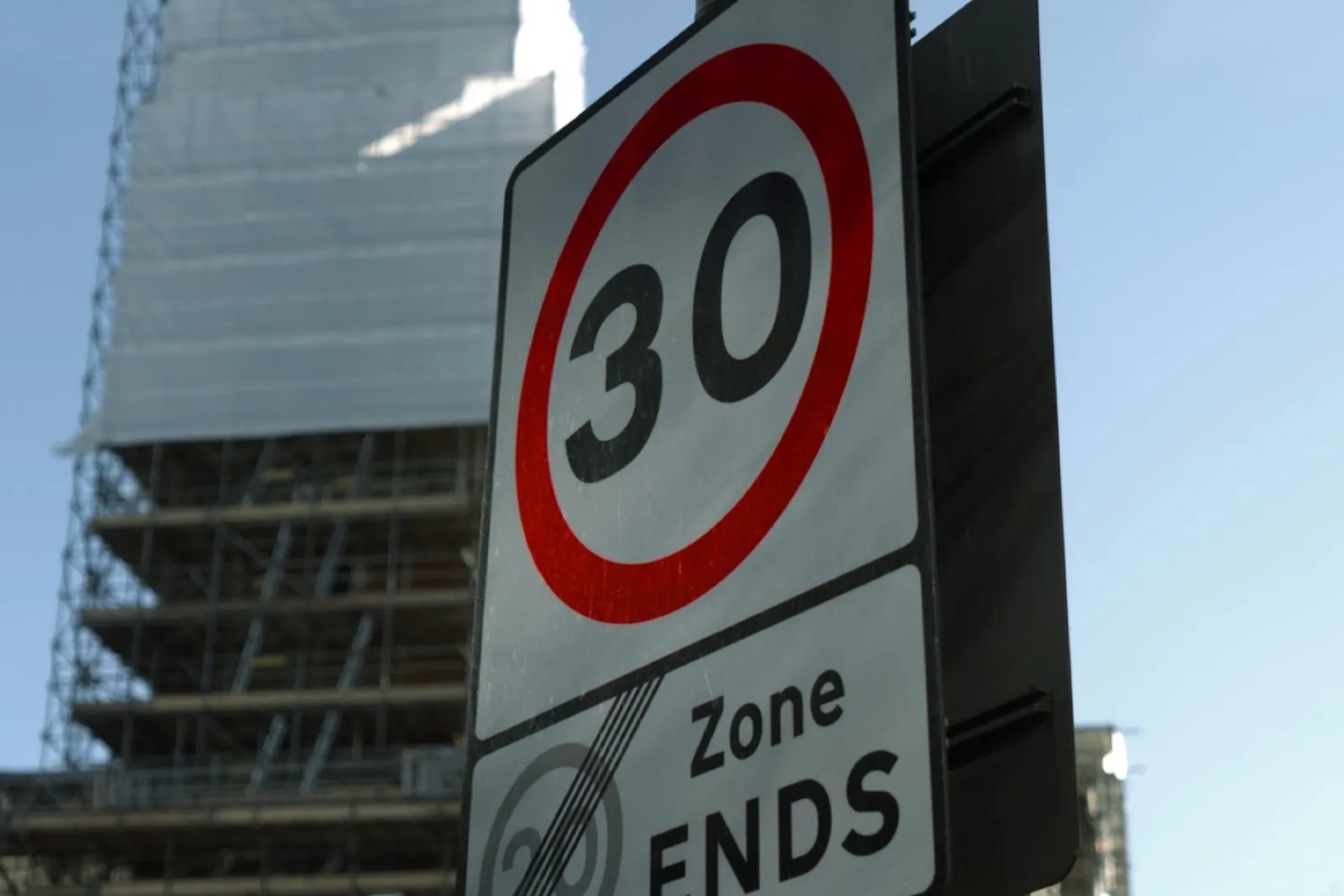
| 'Zone' / 'Zone ENDS' | The rule covers a whole area, set at its entry sign |
Plates never stand alone - each one qualifies the sign (or line) it's mounted with.
04
Quick answers
- Which sign wins if a pole carries several?
- They don't compete - the top sign is the rule, and the plates below qualify it. Read them as one sentence: rule, then when, then where, then who's exempt.
- What if there's no time plate at all?
- Then the rule applies at all times. Time plates limit a restriction; their absence means it never switches off.
- Do the arrows point at the road or along it?
- Along the kerb. An arrow shows which direction the restriction runs from the pole - two opposite arrows split the street into two differently-ruled stretches.
← All resources
Last updated:
Start with a first lesson.