
For learners
Roundabouts, mastered
UK roundabouts become much easier when you separate the task into four decisions: read the signs and markings, choose your lane, give priority to traffic from the right, then signal left before you leave. This visual guide applies Highway Code Rules 184 to 190 to the roundabouts learners meet most often.
01
How every UK roundabout works
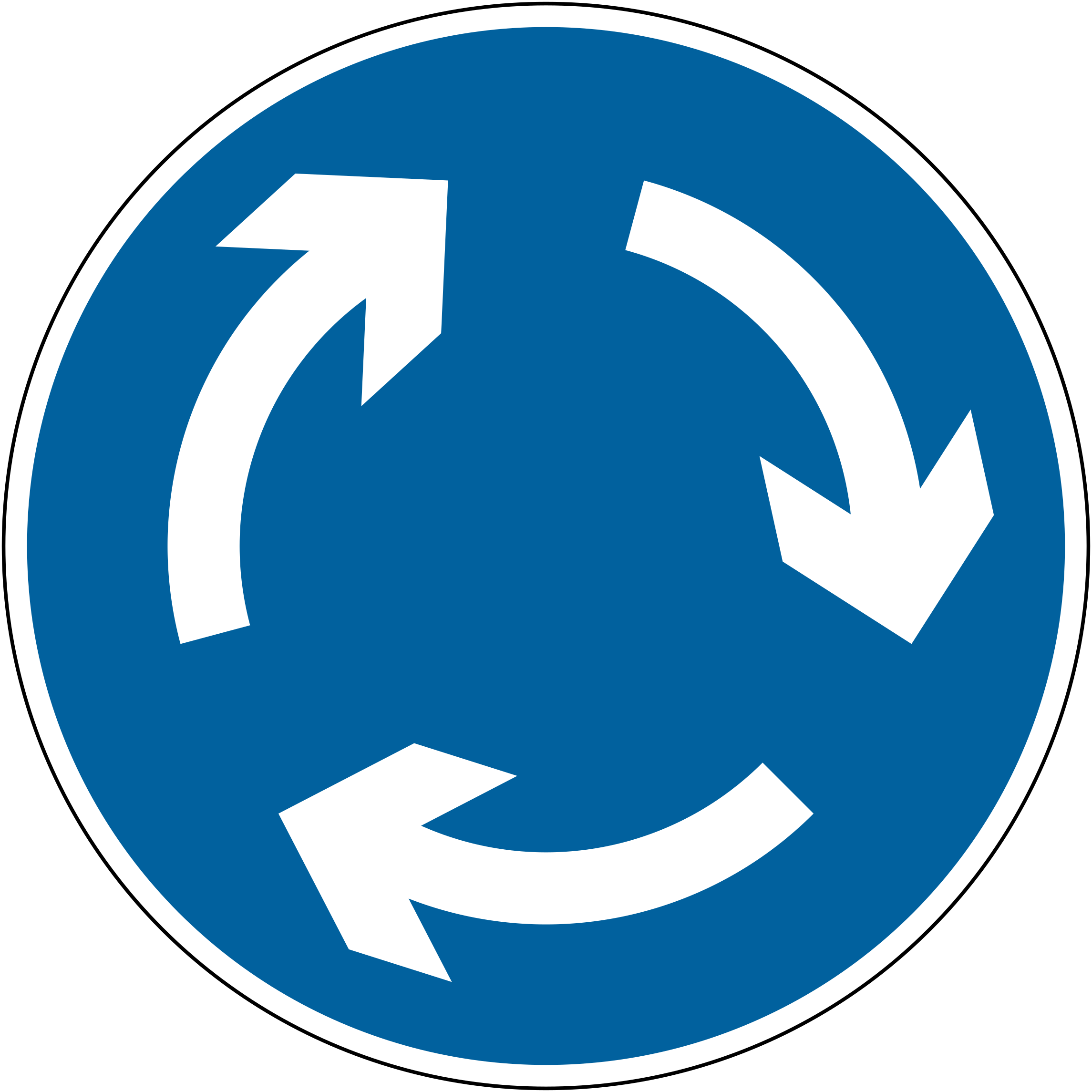
- Read first: signs, traffic lights and lane markings can direct you into a specific lane (Rule 184).
- Give priority to traffic approaching from your right unless signs, markings or lights direct otherwise (Rule 185).
- Circulate clockwise, keeping the central island on your right.
- Use Mirrors - Signal - Manoeuvre throughout, including a mirror check before changing course to leave.
- Look forward before moving off as well as to the right, so you do not drive into a vehicle that has stopped ahead.
02
Signalling: the exact timing
| Where you're going | On approach | On the roundabout | Leaving |
|---|---|---|---|
| Left (1st exit) | Signal LEFT | Keep left, stay in lane | Signal stays left through the exit |
| Intermediate exit | Normally no signal | Use the lane shown by signs and markings | Signal LEFT after passing the exit before yours |
| Right / full circle | Signal RIGHT | Keep right until you need to change course to exit | Signal LEFT after passing the exit before yours |
The key timing: signal left after you pass the exit before the one you want. Signal too early and others may think you are taking the earlier exit.
03
Mini-roundabouts
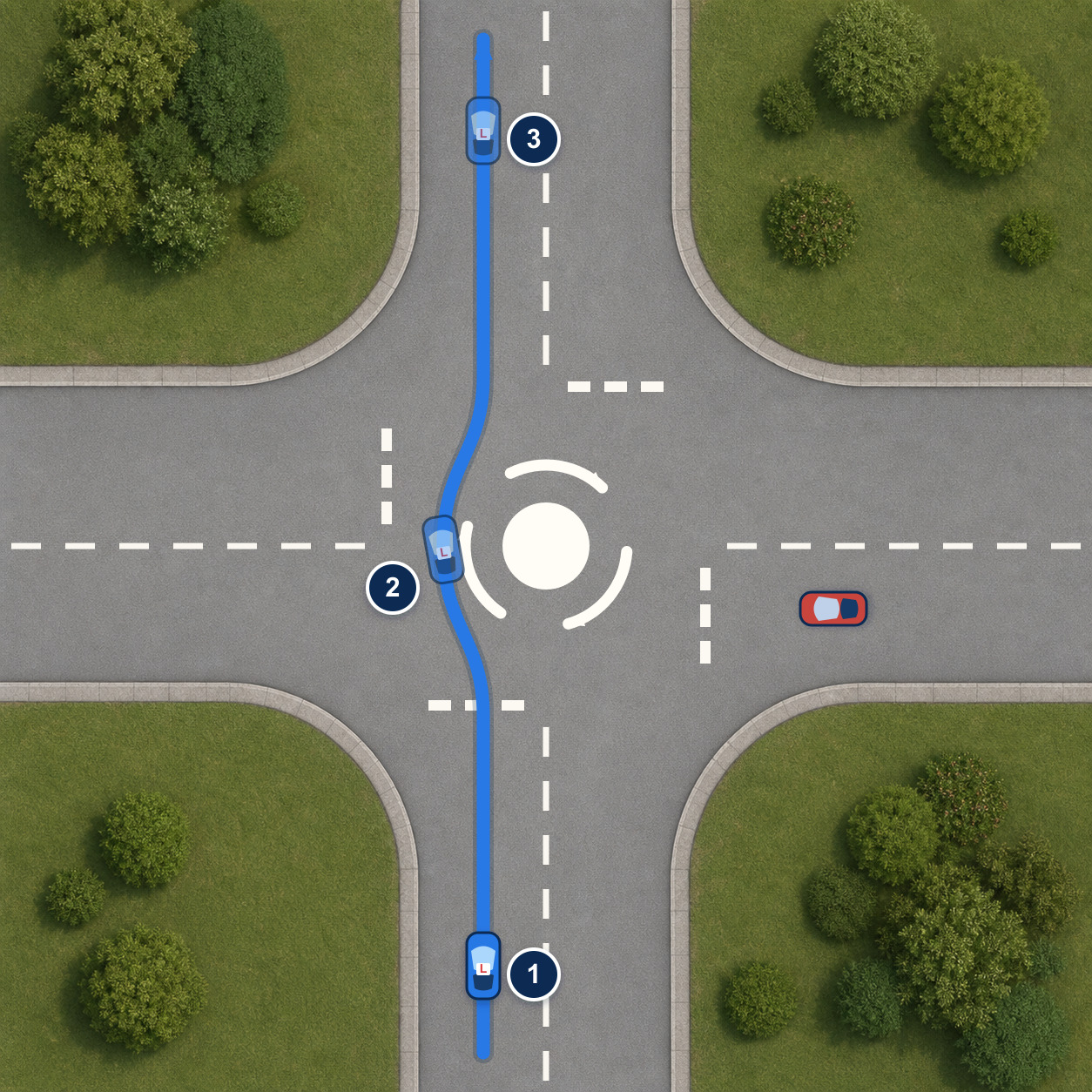
- Same give-way rule as a full-size roundabout, compressed into a junction - so decisions come fast; approach slowly in a low gear.
- Drive AROUND the painted disc, not over it. Only vehicles physically too big to avoid it (lorries, buses) may cross it.
- Signal as normal but be realistic: there's often no time for an exit signal on a tiny mini - observation matters more.
- Beware double minis in a row: treat each one separately, giving way to the right at each.
04
Single-lane roundabouts, step by step
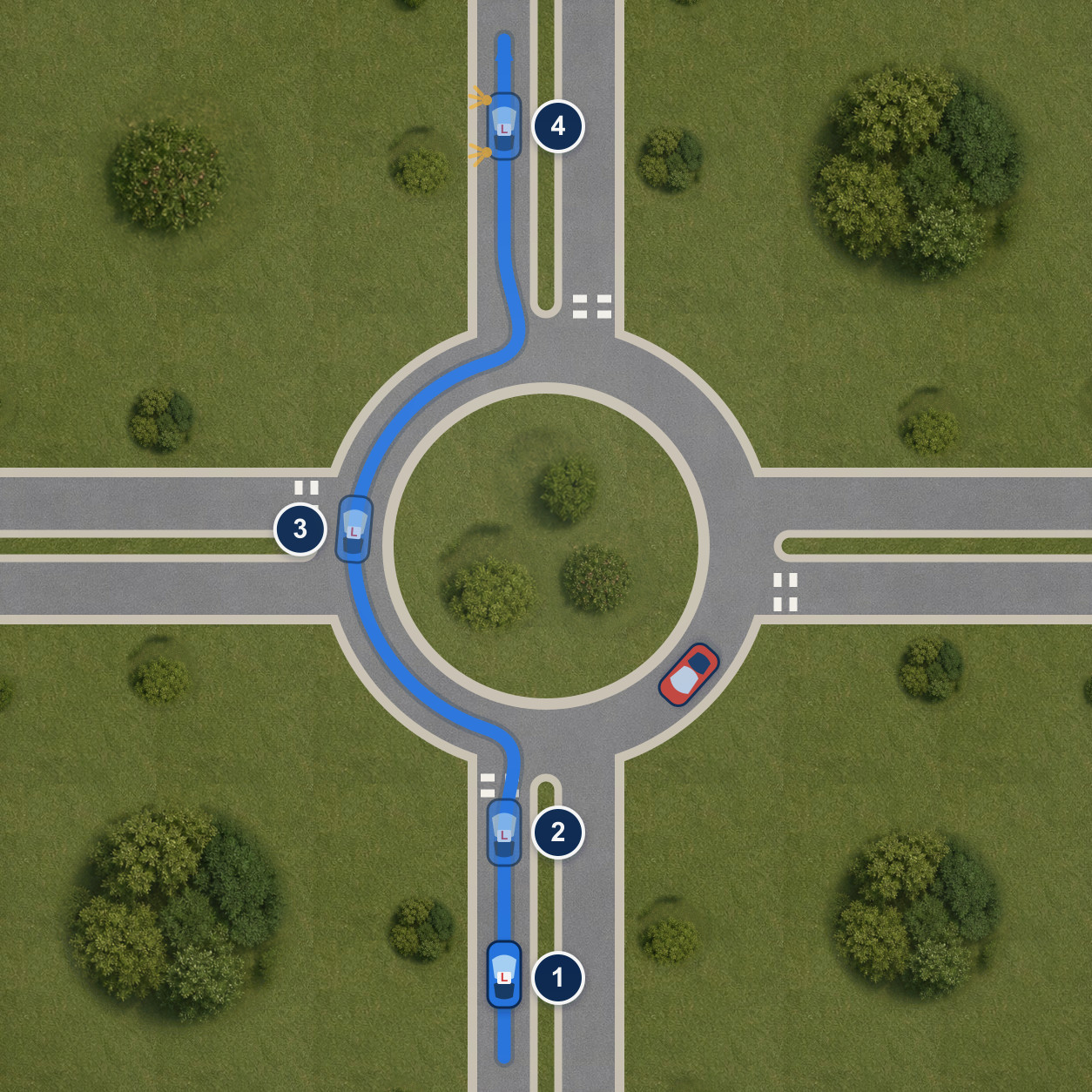
- On approach: read the sign, pick your exit, apply the signal rule from the table above, and set your speed so you could stop at the line - but keep rolling if it's clearly clear.
- At the line: look right (and ahead). Give way to anything already circulating from your right; you don't need the whole roundabout empty, just a safe gap.
- On the roundabout: keep a steady speed, stay in your lane, island on your right.
- Leaving: as you pass the exit before yours, check the left mirror, signal left, and exit into the correct side of the new road.
05
Multi-lane: choosing your lane
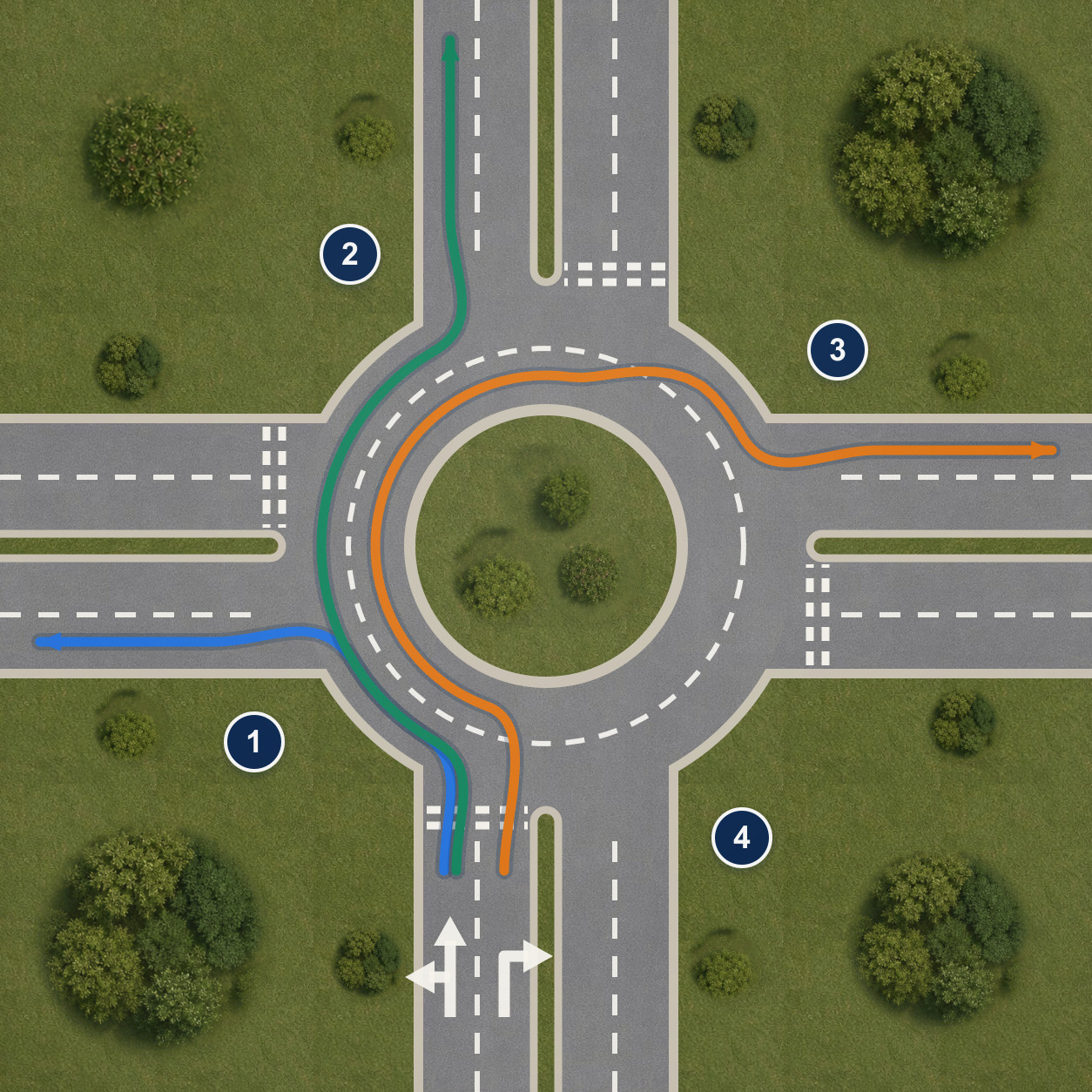
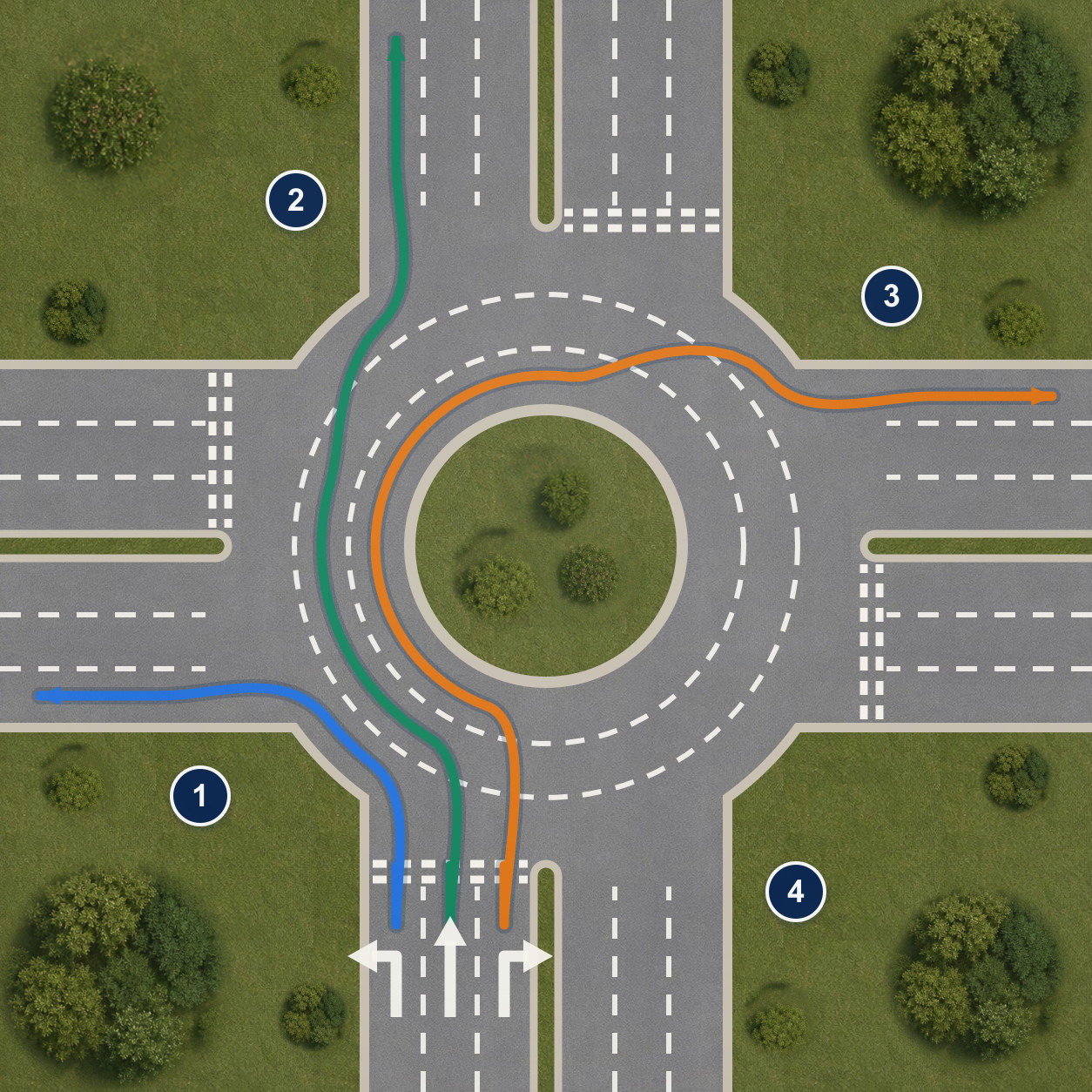
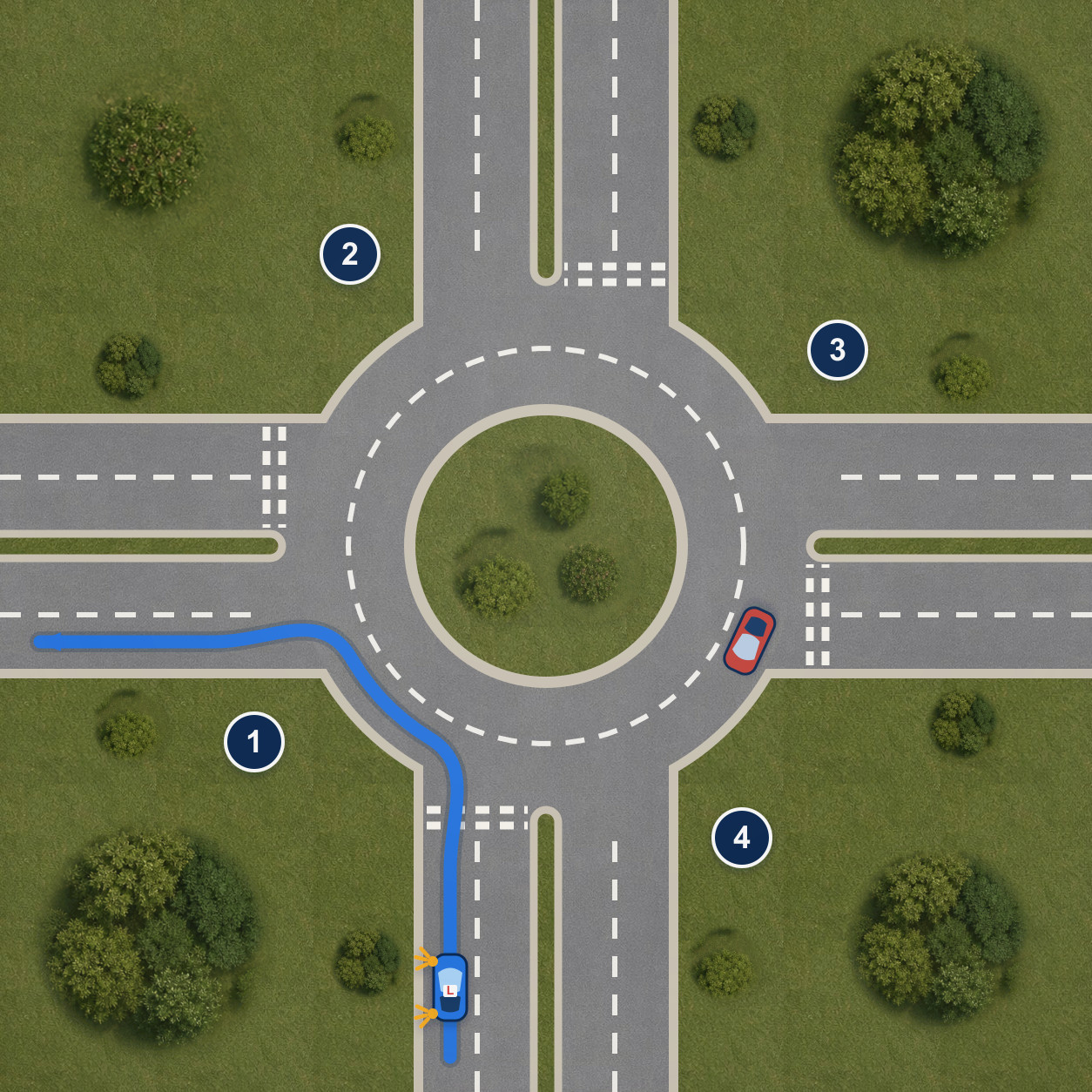
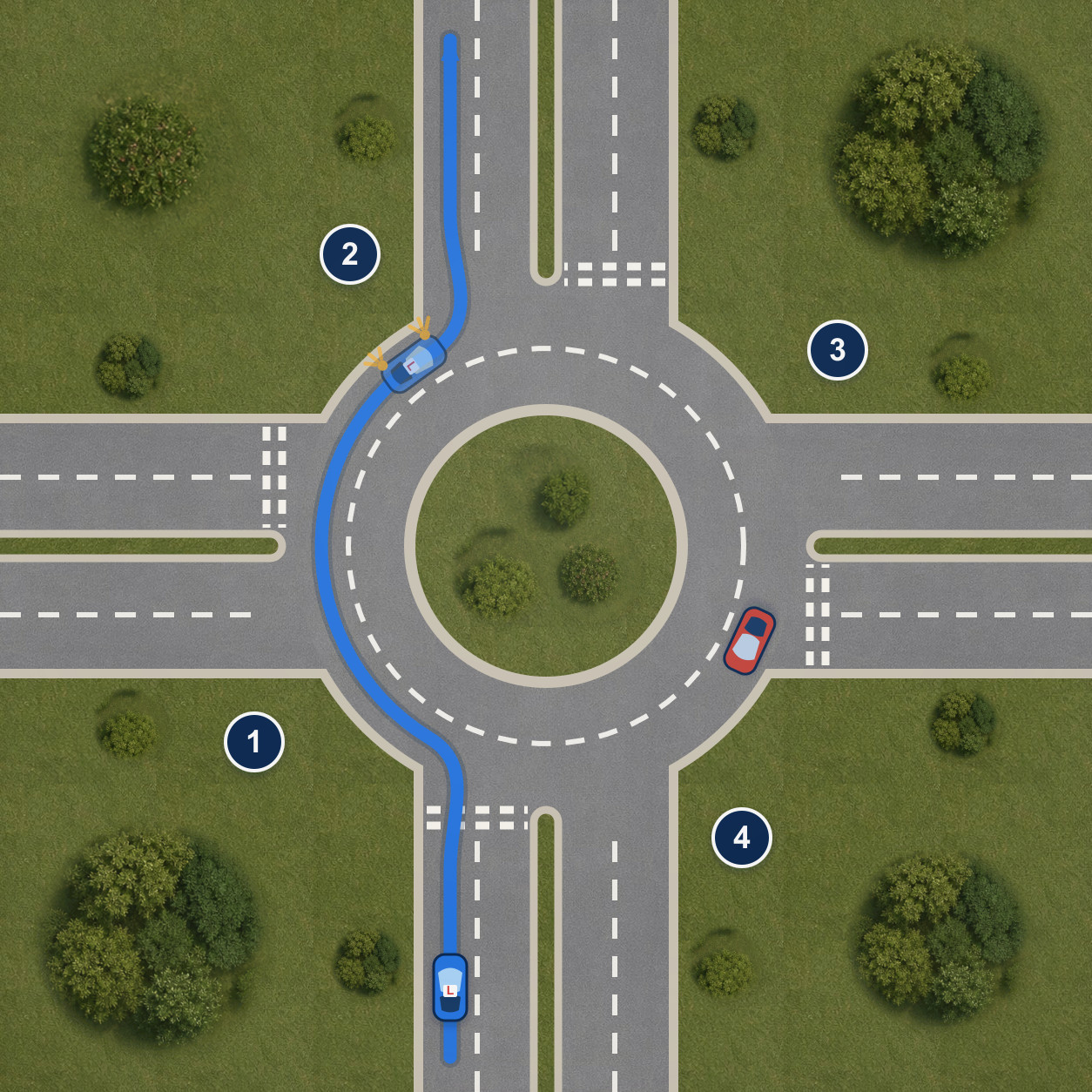
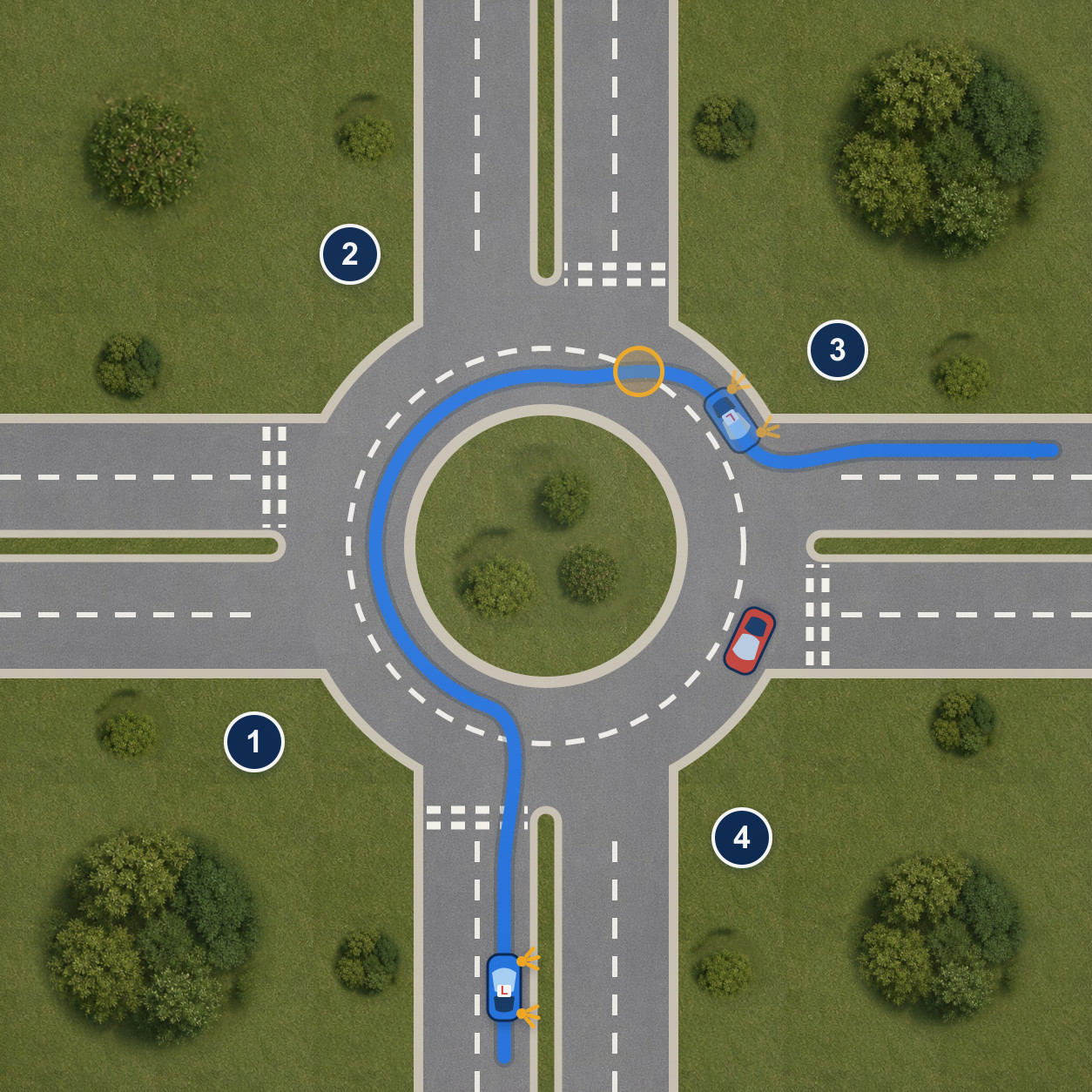
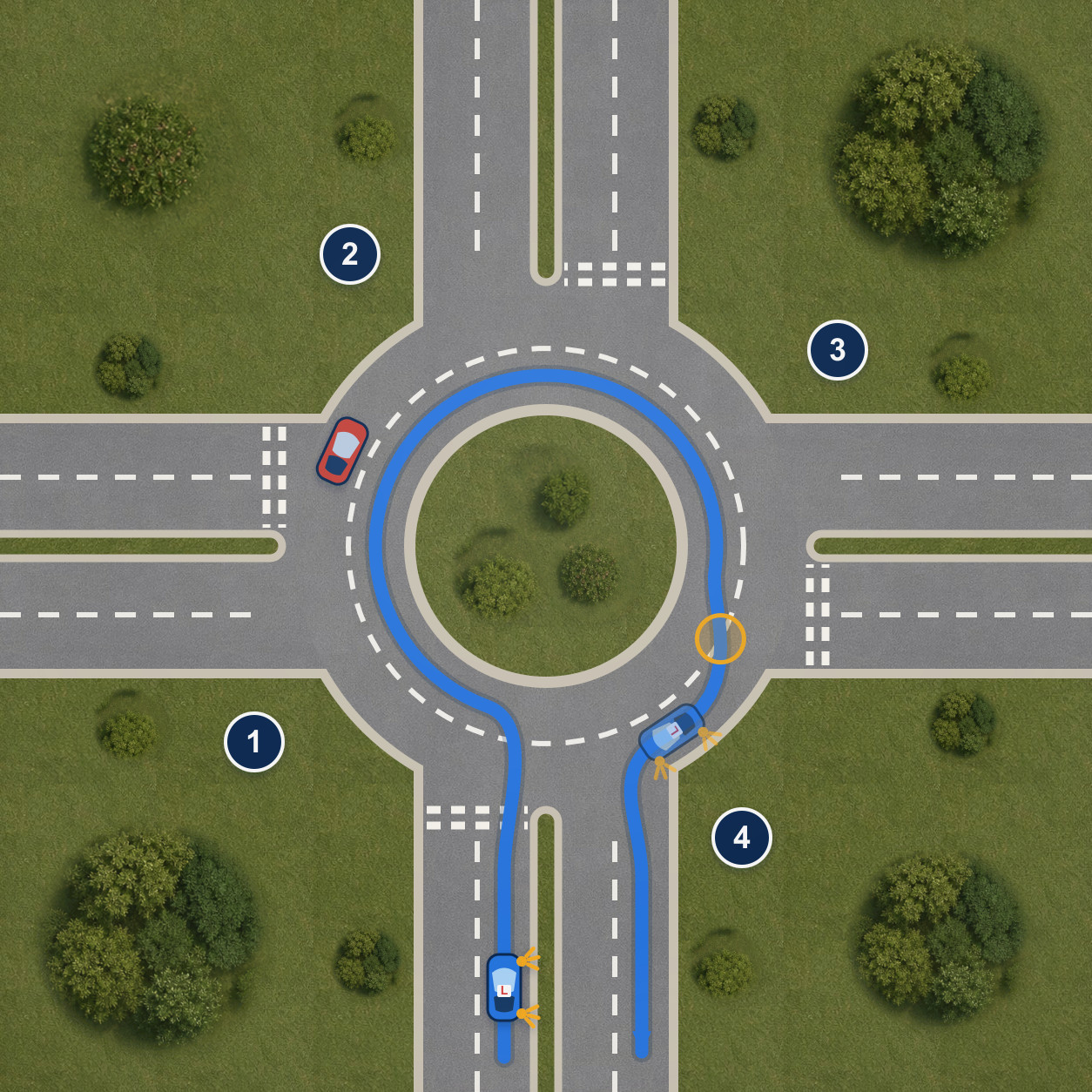
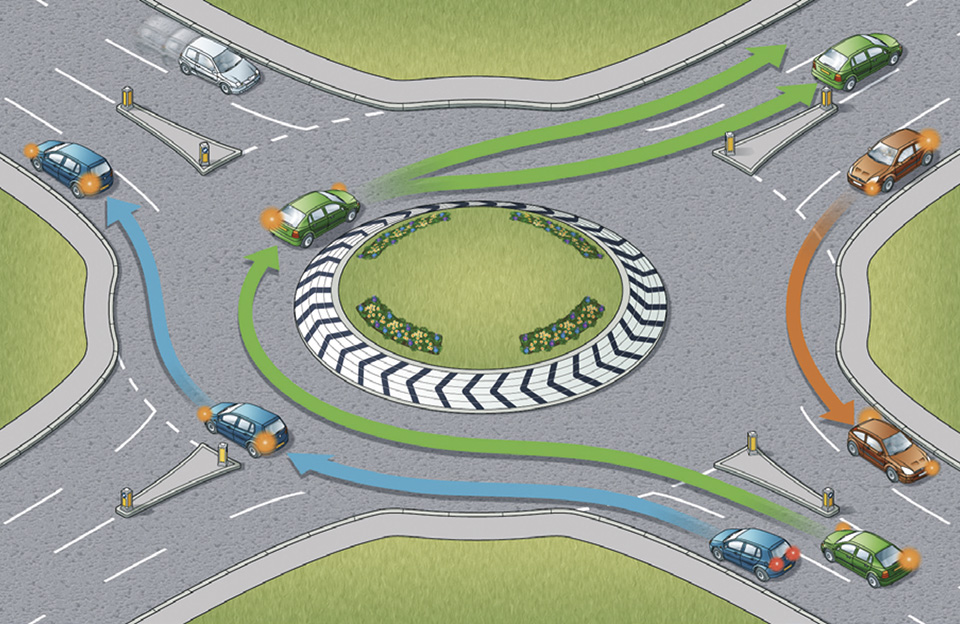
These four diagrams use the same simple unsigned layout so the lane-change sequence is easy to compare. They are not a universal exit-number rule: actual signs, destination arrows and lane markings always decide which approach lane and path to use.
- Start with the signs and road markings. If they do not direct you: use the left lane for the first exit, the right lane for a right turn or full circle, and select the appropriate lane for an intermediate exit (Rule 186).
- Choose your lane before the give-way line. Stay in that lane until the road layout requires you to alter course for your exit.
- Before moving left to leave from a right-hand lane, check the interior and left mirrors, signal left, and make sure the lane beside you is clear. Never assume another driver will create a gap.
- Only expect a lane to guide you outward where the painted markings actually do so. That is a spiral layout, not the rule for every multi-lane roundabout.
- If you are in the wrong lane, follow its permitted direction safely and reroute. Going the wrong way is not itself a driving-test fault, but an unsafe correction can be.
06
Spiral and lane-guided roundabouts
This is a four-arm, four-lane-entry teaching layout where every entry spawns lanes that spiral outward, so each approach lane flows naturally to its own exit. Real spiral roundabouts assign lanes with destination markings and may have more exits or gain and drop lanes differently, so follow the markings under your car rather than memorising these exit numbers.
- Spiral markings guide traffic gradually outward and reduce the need to change lanes on the circulating carriageway.
- The approach decision matters most: read the signs and painted destinations early, then join the lane marked for your route.
- Once on the roundabout, follow the lane boundaries and destination markings under you rather than cutting across towards the exit.
- Some layouts still require a planned lane change. Check mirrors, signal when needed, and move only when the adjacent lane is clear.
07
Traffic-light roundabouts
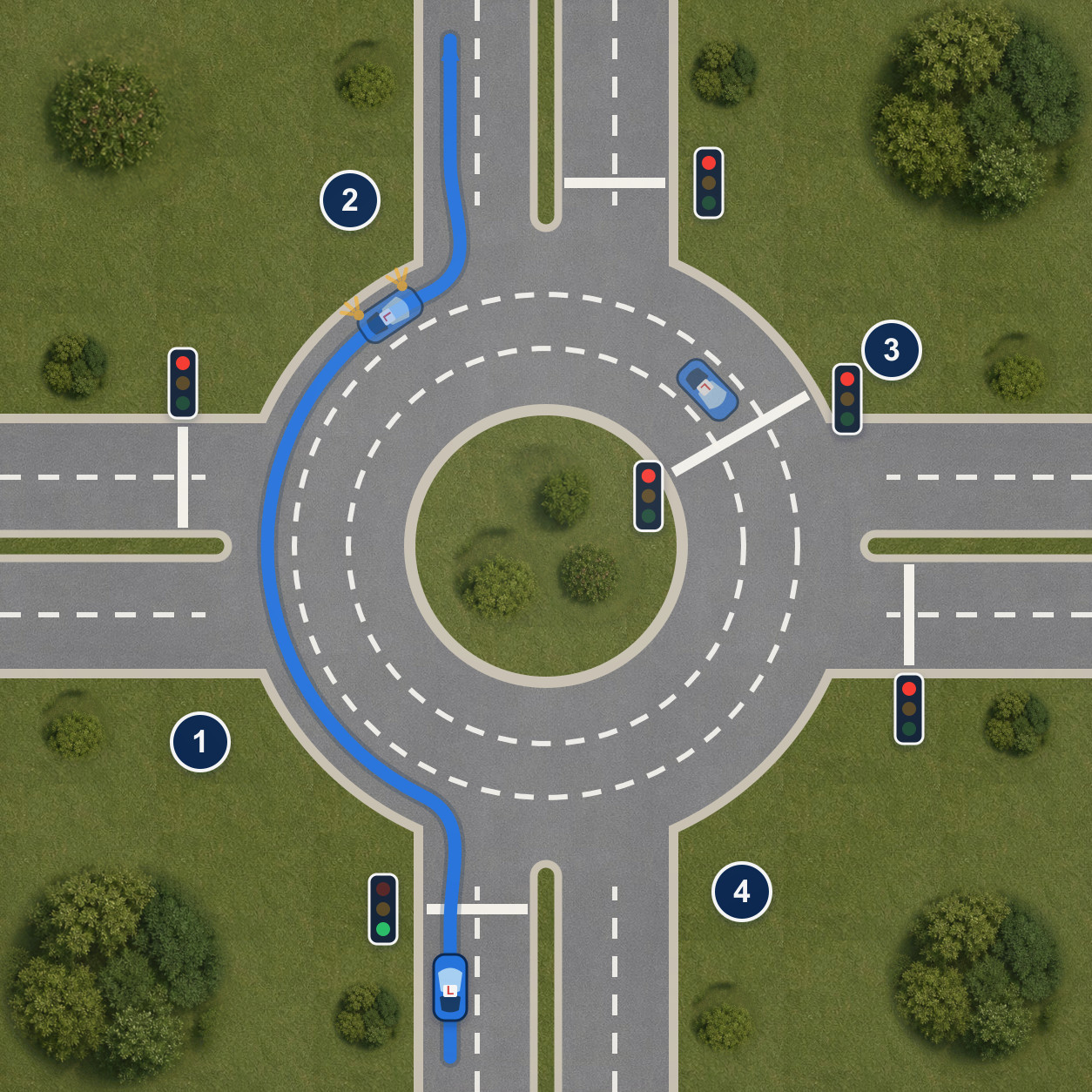
- When the signals are operating, obey them: red means stop behind the stop line; green means you may proceed if your way is clear.
- At part-time signals, use the accompanying signs and road markings when the lights are not operating. Do not guess from the shape of the junction.
- There are often lights ON the ring too - be ready to stop mid-roundabout at a red.
- Keep following the lane arrows and destination markings through each controlled section, and never enter a space you cannot clear.
08
Cyclists and horse riders
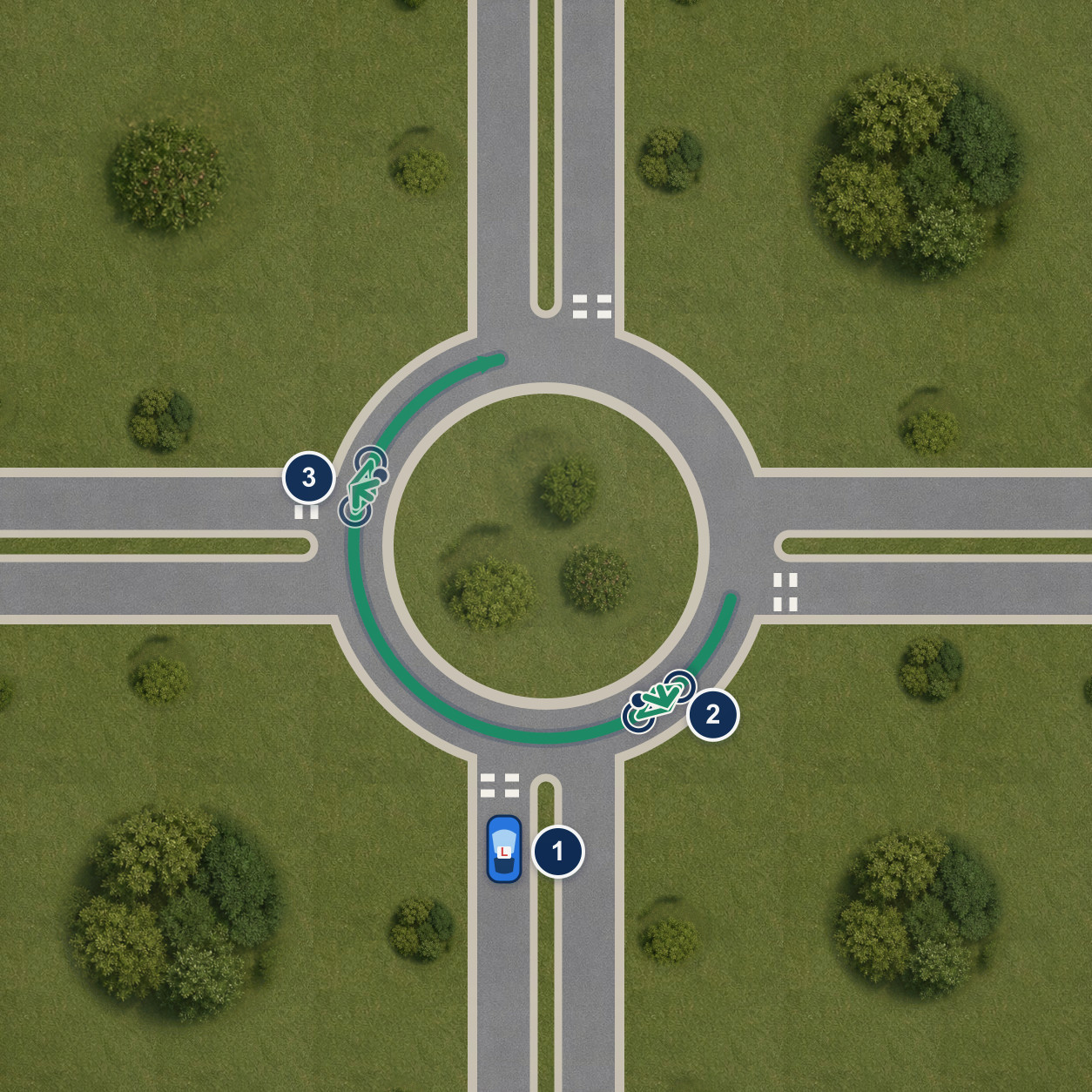
- Cyclists, horse riders and horse-drawn vehicles may stay in the LEFT lane while continuing across or around the roundabout (Rule 186). Do not read their lane position as an intention to leave.
- Give them the same priority as any circulating vehicle, and don't overtake within their lane on the ring.
- Watch your left mirror before every exit - a cyclist continuing round is exactly where that glance looks.
- Also watch for pedestrians crossing the approach and exit roads, and be ready to give them time and space.
09
Learn it on the road
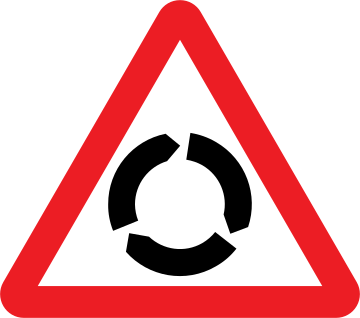
10
Quick answers
- When exactly do I signal left to leave?
- As you pass the exit BEFORE the one you want. Too early looks like you're taking that earlier exit; too late tells the waiting driver nothing.
- Which lane should I use for an intermediate exit?
- Use the lane shown by the approach signs, road arrows and lane markings. On a simple layout the left lane is often appropriate, but the Highway Code says to select the appropriate lane rather than rely on a universal 'straight ahead' rule.
- What if I miss my exit or choose the wrong lane?
- Follow the lane you are in safely and reroute. Going the wrong way is not itself a driving-test fault; braking hard or cutting across lanes can be.
- Do I always give way to the right?
- That's the default (Rule 185), but markings, signs and especially traffic lights override it. When lights are running, obey the light.
- Why did a cyclist on my left continue around?
- Rule 186 says cyclists may stay in the left-hand lane while continuing across or around a roundabout. Give them room and check your left side before exiting.
Last updated:
Start with a first lesson.